2 / 10In progressIn progress
Planning Complex Models
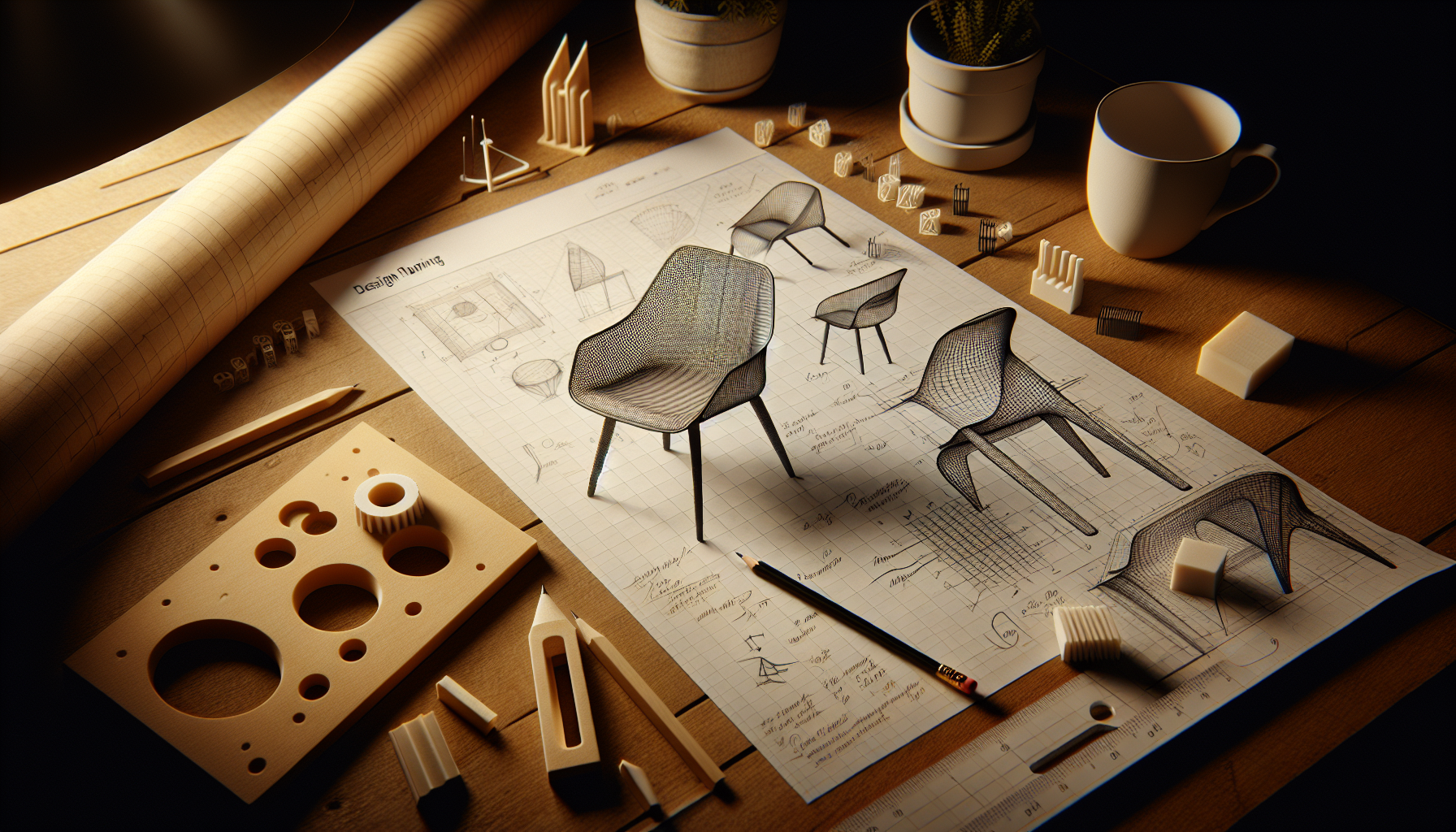
Complex models are just many simple parts.
The Decomposition Process
- 1Identify the overall form
- What is the basic shape?
- Cube? Cylinder? Combination?
- 2List the components
- Break into logical parts
- Each part = primitives + booleans
- 3Define relationships
- How do parts connect?
- What are the constraints?
- 4Plan the order
- Build from base up
- Dependencies first
Example: A Chair
Components
- 1Seat (flat box)
- 2Backrest (flat box, angled)
- 3Four legs (cylinders/boxes)
- 4Optional: Arm rests
Relationships
- Legs at corners of seat
- Backrest at back edge of seat
- Arm rests connect legs to backrest
Build Order
- 1Seat (primary reference)
- 2Legs (positioned relative to seat)
- 3Backrest (attached to seat back)
- 4Arms (connect everything)
Documentation
Keep notes while designing:
markdown
# Chair Design

## Dimensions
- Seat: 45 × 5 × 40 cm
- Backrest: 45 × 40 × 3 cm
- Legs: 4 × 42 × 4 cm (×4)

## Positions
- Legs: 2cm from seat edges
- Backrest: 80° angle

## Colors
- Wood: #8B4513
- Cushion: #404040
Iteration
Professional workflow:
- 1Rough block-out - Basic shapes, test proportions
- 2Refine - Adjust dimensions
- 3Detail - Add smaller features
- 4Polish - Materials, final touches
Don't perfect things too early!